Before you sign up with an insurer, you should know exactly what you’re getting. Here are our tips on choosing the right bicycle insurance for you.


So you've decided to insure your beloved bicycle, congratulations! While bicycle insurance protects your most prized possession and gives you peace of mind, purchasing insurance can be a daunting task.
Coverages, definitions, exclusions, penalties, premiums, terms and conditions - it can all start to make your head spin. There are many times in life when you look back and wonder whether or not you made the right choice, but only asking that question when it comes time to claim can leave you in a bind (and without your bike).
We understand that distinguishing between various bicycle and e-bike insurance policies can be a challenging task. To simplify the process, we created a comparison table highlighting the key differences.
Here are our top tips for choosing bicycle insurance that suits your budget, needs, and lifestyle.
Someone who only uses their bicycle to commute will have very different insurance needs from someone who is a passionate racer and spends their time training for and competing in events.

If racing isn't your thing, selecting a pre-packaged bicycle insurance product that includes racing and event coverage would mean you're over insured - ultimately causing you to pay more in premiums than you should.
Before purchasing bicycle insurance, here are some questions you should ask yourself to make sure your bicycle is covered for the way you ride:
Will you be traveling locally or overseas with your bicycle?
Do you own a car? If so, will you be transporting your bicycle on a bike rack?
Do you have pricey bicycle accessories, custom parts, or additional wheelsets?
Will you be competing in any races or events?
Will you want to cover more than one bicycle, and does your insurer offer multi-bike discounts?
Many cyclists are under the impression that their bicycle is sufficiently covered under their homeowners or renters insurance, but often this isn't the case. They only find out that their bicycle isn't properly covered once it's time to claim - and by that point, it's too late.
Before buying insurance - whether it's for your bicycle or anything else - it's important to shop around first, gathering quotes and comparing coverages and limitations.
While one type of insurance policy might initially seem cheaper, it's vital that you also consider what limitations are applied. There's not much point in saving on monthly premiums if, when it comes time to claim, you find out your bicycle isn't covered for its full value or against certain risks.
Here are some questions you can ask potential insurers so that you can fully understand the value of their product and whether it's right for you:
Is my bicycle covered for theft from as well as away from home?
Is my bicycle covered if I crash it?
Do you provide coverage for bicycles for their full value? Or do you depreciate my bicycle when it's time to claim?
Do you insure my bicycle for accidental and malicious damage?
Do you provide coverage for racing and events?
Do you provide coverage for traveling with my bicycle?
Insurance is usually calculated on an annual basis then divided by twelve, which gives you your monthly premium amount. While, as a consumer, you're entitled to cancel your insurance any time, if you've paid an upfront premium, you may not get it back - even if you haven't claimed.
Along with upfront premiums, some insurers have inconsistent fee structures that are based on collective claims behavior, meaning that your premiums constantly fluctuate according to whether other customers are claiming or not.
By selecting a bicycle insurance policy that's customized to your lifestyle and bicycle, you can ensure that your premiums are not only consistent but personalized too.
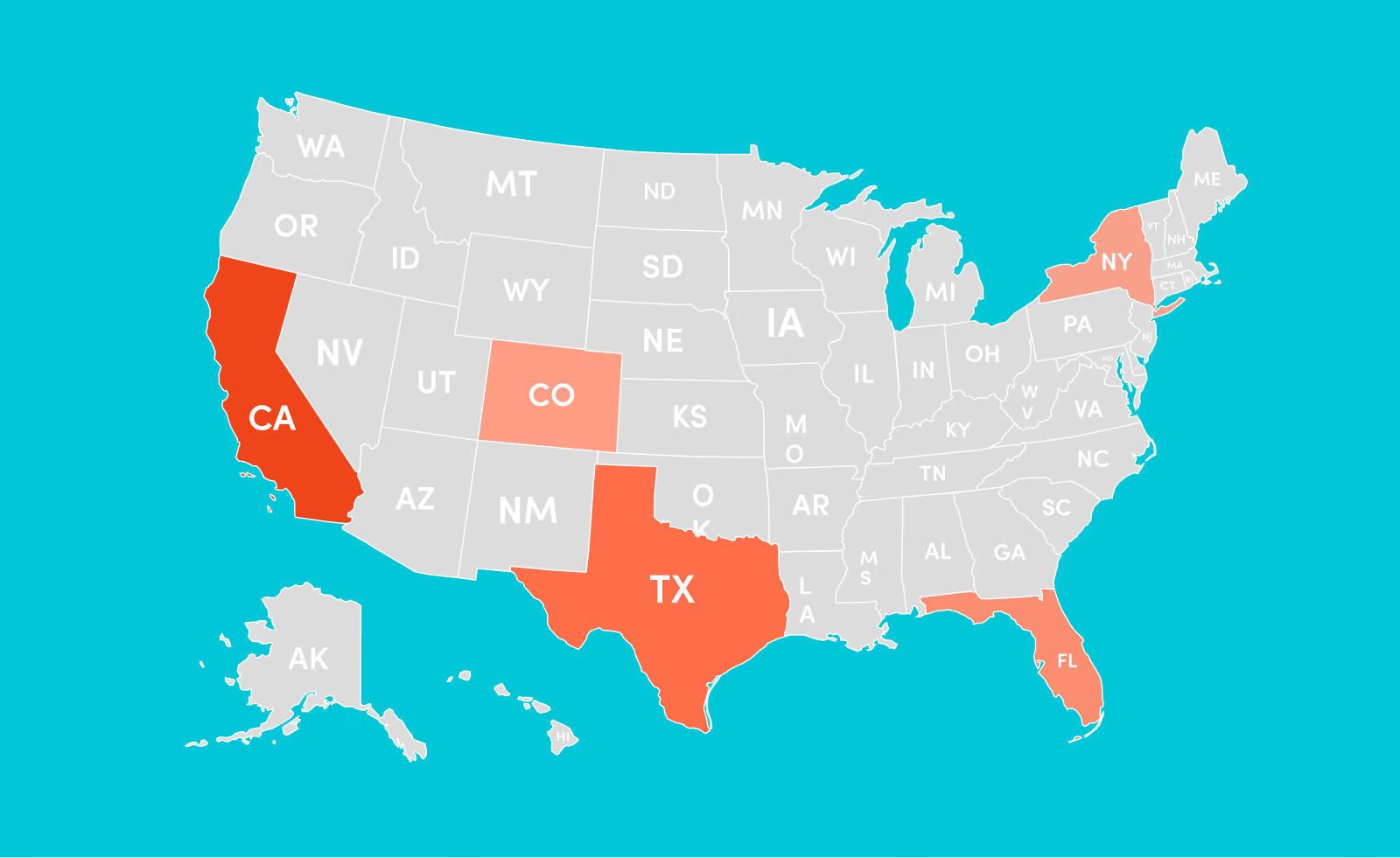
At Sundays Insurance, we don't charge upfront premiums, and we won't penalize you if you cancel your policy - plus, if you take out a policy then change your mind within 14 days, we'll cancel your policy and return your premium. No questions asked (as long as you haven't claimed)*.
Here are some questions you can ask possible insurers to make sure that you understand exactly where your money is going:
Do you require an upfront minimum premium payment? Like $100?
Will I be penalized if I cancel my insurance?
Are my premiums calculated based on collective claims behavior or are they personalized to me and my bicycle?
You want to ensure you select an insurance company that would still be able to pay out if a large portion of their customers all claim at exactly the same time. After all, an insurance policy is only as strong as the company providing it.
Although it may seem unlikely that a company would have to field a huge amount of bicycle insurance claims at the same time, in the event of a natural disaster, for example, this unlikely scenario could become a reality.
All insurers should have information on their website about who their underwriter is.
If you can't find clear information on an insurance company's website about who their underwriter is and what their track record is, you should do further research to establish their credibility before handing over your hard-earned cash.

Our products aren't designed by nameless faces in suits - they're designed by cyclists (who sometimes wear suits) that have a deep understanding of the risks cyclists face.
We don't do one-size-fits-all. That means no upfront premiums, inconsistent fee structures, or pre-packaged coverage plans. You can pay as little as $8 per month, every month, and you can also cancel your policy at any time without any penalties.
We know how much cycling means to you. You can submit an online claim 24/7, and our expert team will work on it with one goal: To get you back on the saddle as fast as possible.
Since 2017, we've been a global perks provider for Strava, one of the world's leading fitness tracking and social media apps. This partnership gives Strava Premium members access to insurance benefits at no additional cost.
Want to see how much it'll cost to cover your bike? Get an online quote in minutes.
*Only available in selected states.
What should I look for when choosing bicycle insurance?
Make sure the coverage matches the way you actually ride, weigh the value and limitations of each policy rather than just the price, understand exactly what you're paying and why, and check that the insurer is financially sound.
Does homeowners or renters insurance cover my bicycle?
Often only partially. Many cyclists assume their bicycle is sufficiently covered under their homeowners or renters insurance, but frequently only find out it isn't once it's time to claim.
What questions should I ask a bicycle insurer before signing up?
Ask whether your bicycle is covered for theft away from home, crashes, accidental and malicious damage, its full value without depreciation, racing and events, and travel - and whether premiums are personalized or based on collective claims behavior.
Do I have to pay bicycle insurance premiums upfront?
Some insurers require upfront premiums or penalize you for canceling. Sundays Insurance charges no upfront premiums, won't penalize you for canceling, and offers a 14-day money-back cooling-off period (in selected states).
How do I know if a bicycle insurer is financially sound?
Check who underwrites the policy. All insurers should clearly state who their underwriter is and what their track record is - if you can't find that information, do further research before handing over your money.


.avif)


.avif)

