Compare the best bicycle insurance providers in the US for 2026. Sundays, Velosurance, and BikeInsure go head to head on coverage, pricing, theft protection, and real-world value. Find out which one is right for your bike.

.avif)
Around 2.4 million bikes are stolen in the US every year, and fewer than 5% are ever recovered. That's a painful number when a mid-range road bike costs $1,500 and a decent e-bike runs $3,000 or more.
‘Best’ depends on what you need: lowest price, highest coverage cap, strongest underwriter, or longest track record. This guide breaks down the trade-offs across the three major US bicycle insurance providers so you can pick the best fit for you.
Homeowners and renters policies often exclude bicycles entirely or cap coverage at around $2,500, usually paired with a deductible of $1,000 or more. That makes smaller claims pointless to file, and a claim on your home policy can affect your premium at renewal. Dedicated bicycle insurance is built around cycling-specific risks like crash damage, transit damage, and race incidents, and pays out without touching your home cover.
Bike values are up, especially for e-bikes. Theft rates remain high. And standard home insurance sometimes treats bikes as an afterthought.
Dedicated bike insurance is priced for cyclists and covers the situations that home policies tend to exclude. It also typically pays out without affecting your home insurance premium.
The maximum coverage per bike matters. If you own a $4,000 road bike or a $6,000 premium e-bike, you need a policy that can actually cover it. Some providers cap per-bike coverage at $10,000, others go higher. Underinsuring a high-value bike means absorbing the difference yourself if the worst happens.
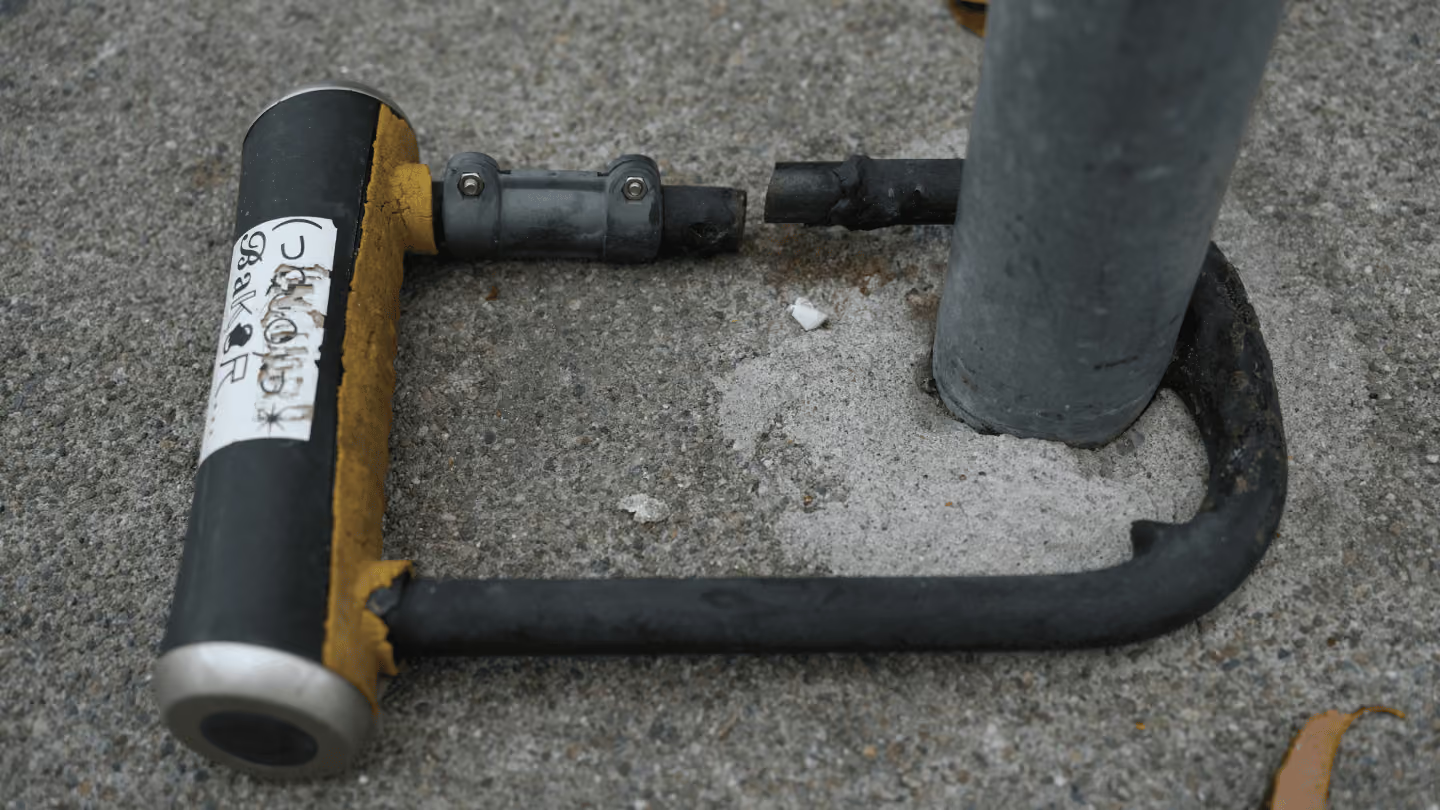
Theft cover should be in the base policy, not locked behind an expensive add-on. It's also worth understanding what qualifies. Is your bike covered and locked outside a coffee shop? In your garage? While travelling? The better policies cover theft in a wide range of scenarios with few restrictions.
Financial strength of the underwriter is easy to overlook and important to check. An AM Best "A" rating or higher signals the underwriter is in strong financial standing and able to pay claims.
Depreciation is the next thing to check. Some policies depreciate your bike over time. Others pay out the full insured value regardless of age.Buy a $2,500 bike today, have it stolen in year three, and some policies will hand you $1,800 because they've devalued it on a schedule. Others pay the full insured value regardless of age. The terms to look for are "agreed value" or "replacement cost" - both Sundays and Velosurance offer some version, though they differ on the detail.
Travel cover varies. Not all policies cover your bike internationally, so check whether worldwide cover is included as standard or available as an affordable add-on.
Finally, the better bicycle insurers tend to be embedded in the cycling community rather than just adjacent to it. Sundays partners with Project 529, one of the largest bike registries, which runs theft deterrence programs in cities worldwide. BikeInsure is partnered with USA Cycling, IMBA, and USA Triathlon. Velosurance offers member discounts to USAC, USAT, and IMBA riders.
Below is an honest look at the three major dedicated bicycle insurance providers available across all 50 states. We're Sundays Insurance. We think our product is great, but we want you to make an informed choice. Here is how we compare.
Starting price: $8/month max coverage per bike: $21,500 Underwriter: Tokio Marine HCC (via USSIC) Available in: All 50 states
Sundays launched in 2021 and focuses on modern, cyclist-friendly insurance. Their integrations with Strava and Project 529 set them apart. Project 529 is a national registry that helps recover stolen bikes. Sundays offers full replacement value for bikes insured within 60 days of purchase; otherwise, standard depreciation applies after two years.
Starting price: from $100/year max coverage per bike: Agreed value (no published hard cap) Underwriter: Markel American Insurance Company (AM Best "A" rated) Available in: All 50 states
Velosurance was founded in 2012 by two cyclists and is the longest-established specialist bicycle insurer in the US. They offer replacement cost cover with no depreciation, regardless of when the bike was first enrolled. That's a notable difference from some competitors. Standard cover extends across the US and Canada, with international cover available as an optional add-on.
Starting price: $16.99/month (base damage cover) Theft add-on: +$8/month Max coverage per bike: $10,000 Underwriter: Great American Insurance Company (AM Best "A+" Superior rated) Available in: All 50 states
BikeInsure is a licensed insurance producer whose policies are underwritten by Great American Insurance, one of the highest-rated insurers in the US. They are the official bike insurance partner of USA Cycling, IMBA, USA Triathlon, and the League of American Bicyclists. The $10,000 coverage cap is a real limitation if you own a high-value bike, and the total cost with theft protection ($24.99/month) runs higher than the other two providers. The base deductible is $100 for damage claims and $250 for theft claims.
Dedicated bike insurance generally ranges from about $8/month to $25/month depending on the provider and the cover you choose. Within that range, your premium is driven mainly by your bike's value: a $5,000 e-bike costs more to insure than a $1,000 hybrid. Where you live matters too. Urban areas with higher theft rates (Los Angeles, New York, San Francisco, Chicago) typically carry higher premiums, though this varies by insurer.
How you store your bike also factors in. Bikes kept in a locked garage are lower risk than those regularly left outside. Your deductible level is the lever you control directly: a $250 deductible costs less than a $100 one, but only choose what you can actually afford to pay. Insuring multiple bikes on one policy is usually cheaper than separate policies.
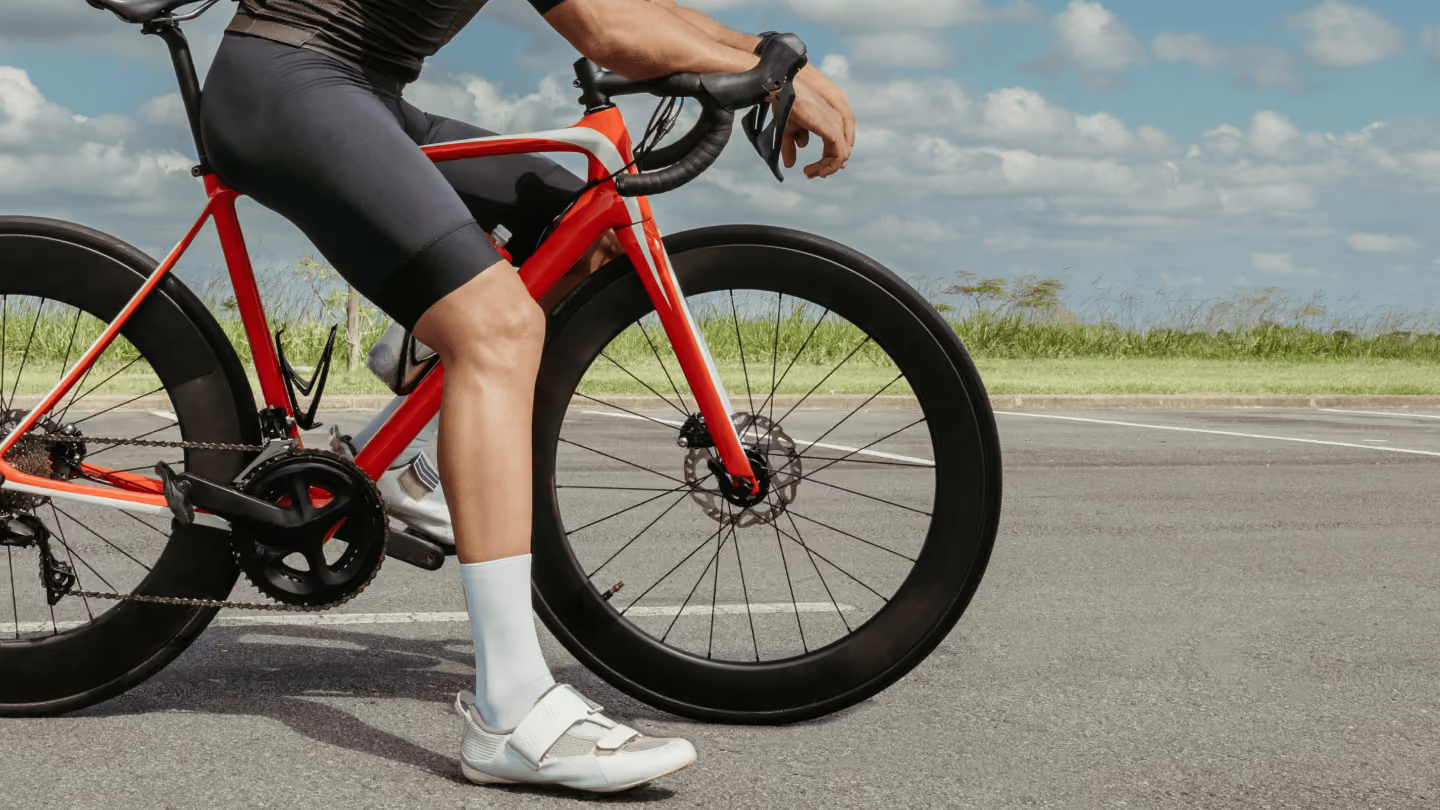
E-bikes have changed the insurance landscape. They carry a higher price tag and are more likely targets for theft. Plus, compared to conventional bikes, they are much more vulnerable to specific types of damage.
Coverage limits matter more here. Many premium e-bikes cost $3,000 to $6,000, so a $10,000 cap, while sufficient for most riders, leaves some high-end e-bike owners short. Battery and motor cover is the next thing to confirm. Some policies cover the frame but exclude the battery, which is often the most expensive single component. Always check what's in and out. No-depreciation cover is especially worth having on an e-bike, where battery technology evolves quickly. Most US policies cover Class 1, 2, and 3 e-bikes up to 750W assisted speed, but confirm your bike qualifies before buying.
Bicycle theft is the primary reason dedicated bike insurance exists, so it's worth understanding how theft cover actually works.
Academic research estimates approximately 2.4 million adult bicycles are stolen annually in the US, with a total annual value of around $1.4 billion. [needs sourcing] Recovery rates are low. For unregistered bikes, Project 529 puts the US recovery rate at around 5%. [link to Project 529 source page] Registration with a platform like Project 529 or Bike Index improves those odds.
Good theft cover should protect your bike at home, locked outside, in transit, and (with some providers) internationally. Most policies require the bike to be secured with an approved U-lock or heavy-duty chain lock when it's left in public.
Watch out for depreciated payouts. Some policies pay out the depreciated value of your bike at the time of theft, which can sharply reduce your settlement on older bikes. Others pay the full agreed or replacement value. Both Sundays and Velosurance offer no-depreciation theft cover, though Sundays limits this to bikes enrolled within 60 days of purchase, while Velosurance applies it regardless of when the bike was enrolled.
Some policies include medical payment cover for your own injuries if you crash. This is less essential if you have good health insurance, but it can be useful if your health plan has a high deductible or requires prior authorization. Medical payment cover from your bike insurance pays directly without those hurdles.
Most policies offer $100,000 to $300,000 liability limits. For most cyclists in most situations, $100,000 is enough. If you race or ride heavily in high-traffic environments, $300,000 gives you more room if a serious-injury claim ever goes against you.
Getting a bicycle insurance quote takes about five minutes. You'll need your bike's make, model, and year; how and where you bought it (new or used); the purchase price or current estimated value; and how and where you primarily store it. From there, you'll choose your cover type (theft, damage, liability), your deductible, and whether to pay monthly or annually. Most providers generate a quote within seconds.
Standard homeowners and renters insurance frequently falls short for bike owners, through sub-limits, exclusions, high deductibles, or premium impacts from claims.
All three providers reviewed here offer legitimate, dedicated bicycle cover. Sundays has the lowest entry price and modern tech integrations, but a shorter track record. Velosurance has no-depreciation cover regardless of enrollment date and over a decade of specialist experience. BikeInsure costs more for full cover but is backed by an A+ rated underwriter and has the strongest organisational endorsements in the cycling community.
Get a quote from at least two of the three before you decide. The five minutes it takes will tell you more about which fits your bike, your storage situation, and your budget than any guide can.
How much should I insure my bike for?
Insure your bike for what you'd need to spend to replace it today with an equivalent new model. Don't underinsure: you're only shortchanging yourself in a claim.
Will insurance cover my bike if it's damaged in an accident?
Most dedicated bike insurance policies cover accidental damage (crashes, falls, collisions) as part of base cover, separate from theft. Some policies have exclusions for racing-related damage. Check your specific policy.
Can I insure a bike I already own, or does it have to be new?
You can insure bikes you already own at any age. There is no restriction on insuring vintage or used bikes. The insurer will ask for your estimate of the bike's current value, and that becomes your coverage limit. Note that no-depreciation replacement terms may differ for bikes not enrolled at the time of purchase, so check with your provider.
What if my bike is stolen and later recovered by police?
If your bike is stolen, you file a claim and receive payment. If police later recover it, handling varies by provider. Some will ask you to return the payout and take the bike back; others won't. Clarify this with your insurer before you need to use it.
Does bike insurance cover accessories like lights, locks, and computers?
Many policies cover permanently attached accessories but exclude portable items like locks, bags, and helmets. Some allow you to add accessory cover for an additional premium. Ask your insurer specifically what's covered.
What happens if I move to a different state?
If your insurer covers your new state, your policy typically continues without interruption. Rates may adjust based on your new location's theft environment. All three providers reviewed here operate in all 50 states.


